
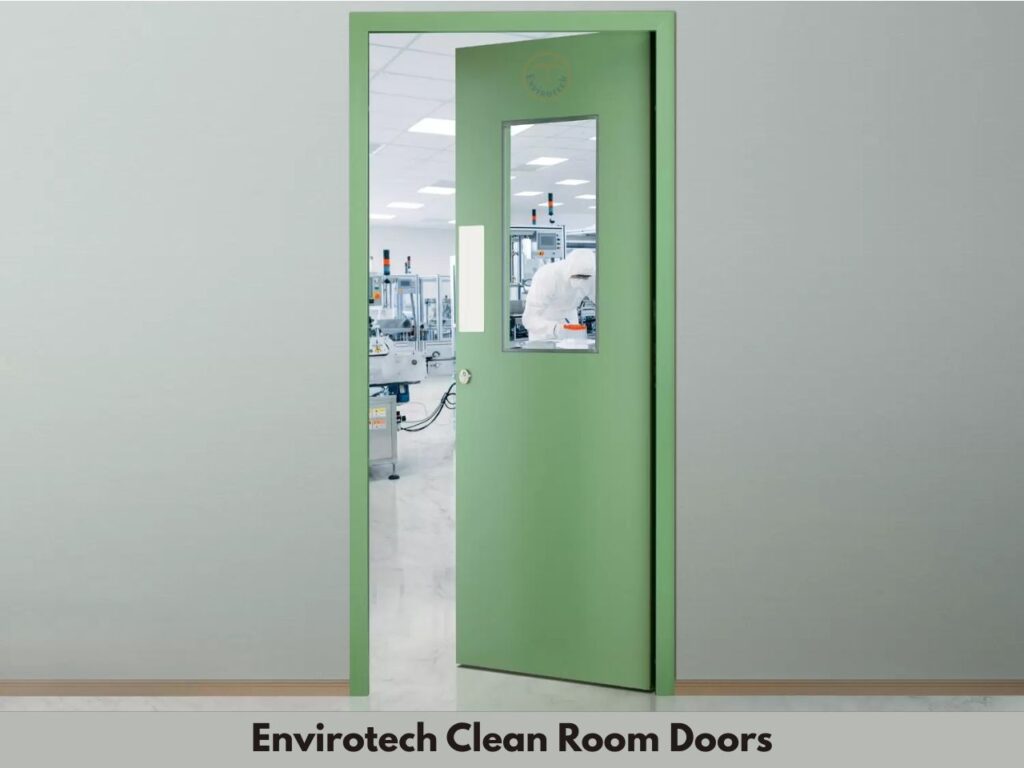
Envirotech Clean Room Door is not a regular door. It is a specially designed barrier that prevents dust, microorganisms, air leakage, and pressure imbalance. Without proper doors, even advanced filtration systems cannot keep the environment sterile. This guide explains clean room doors, their design, features, types, materials, and importance in contamination-sensitive facilities.
Industries such as pharmaceuticals, healthcare, biotechnology, electronics, and food processing depend on environments where contamination must be tightly controlled. These controlled areas are known as clean rooms, and every component inside them plays a role in maintaining purity — including the doors.
What Is a Clean Room Door?
A clean room door is a precision-engineered door built to maintain controlled air conditions inside a clean room. It ensures that airborne particles, bacteria, humidity, and outside air do not enter the protected space.
These doors are airtight, smooth surfaced, and resistant to chemicals and frequent cleaning. They are designed to support air pressure differences between rooms, which is essential to prevent contamination transfer.
In simple words, a Hospital Clean Room Door protects the sterile environment by sealing the room from unwanted exposure.
Why Clean Room Doors Are Essential
Clean rooms operate under strict international standards like ISO and GMP. Even microscopic particles can damage products, affect experiments, or risk patient safety.
Clean room doors help facilities by:
- Maintaining pressure balance between rooms
- Blocking dust and microbial contamination
- Protecting sensitive products and equipment
- Supporting sterile manufacturing
- Ensuring regulatory compliance
- Reducing product rejection and waste
If the door sealing fails, the clean room loses its classification — making the entire environment ineffective.
Important Features of Clean Room Doors
Clean room doors include specialized engineering elements that make them suitable for sterile environments.
- Airtight Sealing System: High-quality gaskets prevent leakage of air and particles.
- Flush Smooth Surface: The door surface has no grooves or joints, preventing dust accumulation.
- Chemical Resistant Finish: They withstand disinfectants, alcohol, and cleaning agents used in hygiene areas.
- Vision Panel: Double-glazed flush glass allows visibility without opening the door.
- Interlocking Mechanism: Prevents both doors from opening at the same time, maintaining air pressure.
- Hygienic Hardware: Handles, hinges, and locks are designed to avoid bacterial growth.

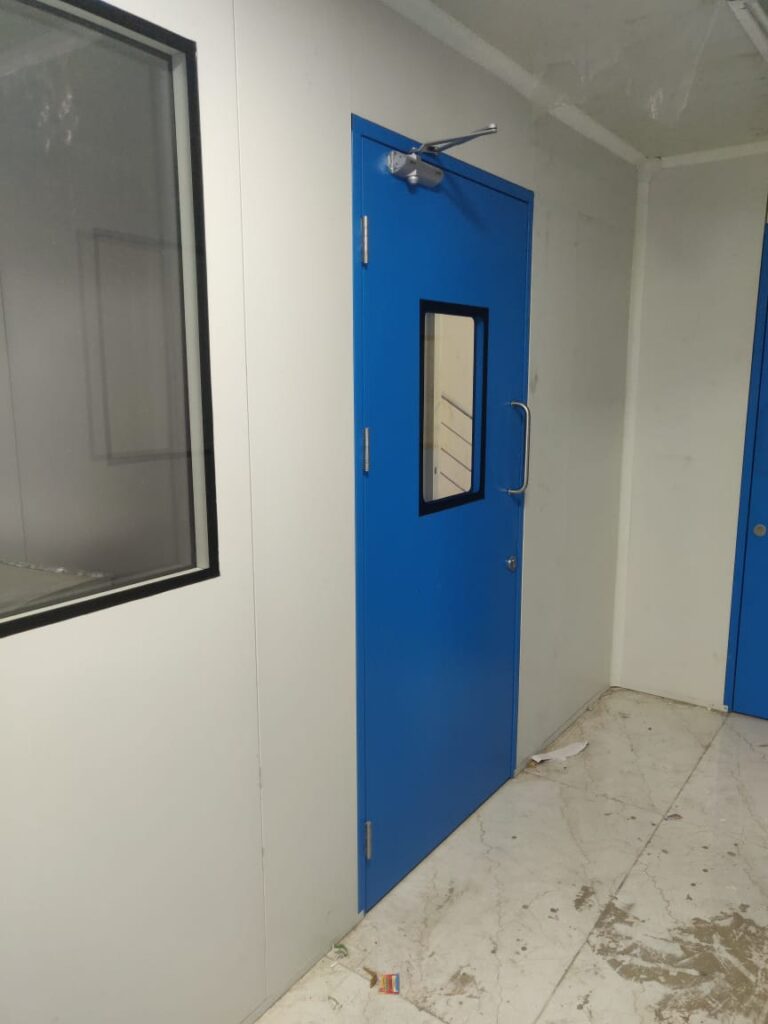
Types of Clean Room Doors
Different clean rooms require different door mechanisms depending on space and cleanliness level.
- Hinged Doors: Most commonly used in laboratories and pharma plants. They provide strong sealing and durability.
- Sliding Doors: Suitable for movement of trolleys and equipment in narrow corridors.
- Automatic Doors: Sensor-based doors used in hospitals and high hygiene areas to avoid hand contact.
- Hermetically Sealed Doors: Used in operation theatres and bio-safety labs where near-zero air leakage is required.
Applications of Clean Room Doors
Clean room doors are widely used in:
- Pharmaceutical manufacturing plants
- Hospitals and operation theatres
- Biotechnology laboratories
- Electronics and semiconductor industries
- Food and beverage processing units
- Research facilities
- Cosmetic production areas
Laboratory Clean Room Door are a crucial part of contamination control systems. They act as protective shields that preserve sterile conditions and ensure compliance with strict industrial regulations. A clean room cannot function effectively without proper sealing, and the door is the most vulnerable point of entry. Therefore, selecting the right clean room door improves safety, reliability, and operational efficiency. For any controlled environment — whether pharmaceutical, healthcare, or electronics — clean room doors are not optional; they are essential infrastructure.

